


In Short / Key Takeaways
- Clear acrylic suits projects where seeing through the panel matters. Clear Acrylic Variation
- Tinted acrylic adds colour to the view, but does not automatically provide privacy. Tinted Variations
- Opal acrylic transmits and diffuses light rather than providing a clear view. Opal Variations
Start With the View You Want
Imagine replacing the clear insert in a cupboard door.
With clear acrylic, the contents remain part of the room. A transparent tinted sheet adds a coloured appearance while retaining a view through the panel. An opal sheet changes the effect again, allowing light through while obscuring detail.
That is why the decision involves more than matching the paintwork.
| Acrylic option | Main visual effect | Projects worth considering |
|---|---|---|
| Clear | A transparent view through the panel | Display covers, cabinet inserts and signage |
| Transparent tinted | A view through a coloured panel | Decorative cabinet inserts and display features |
| Opal | Translucent light diffusion without a clear view | Light boxes, illuminated signs and decorative panels |
The exact result depends on the selected product.
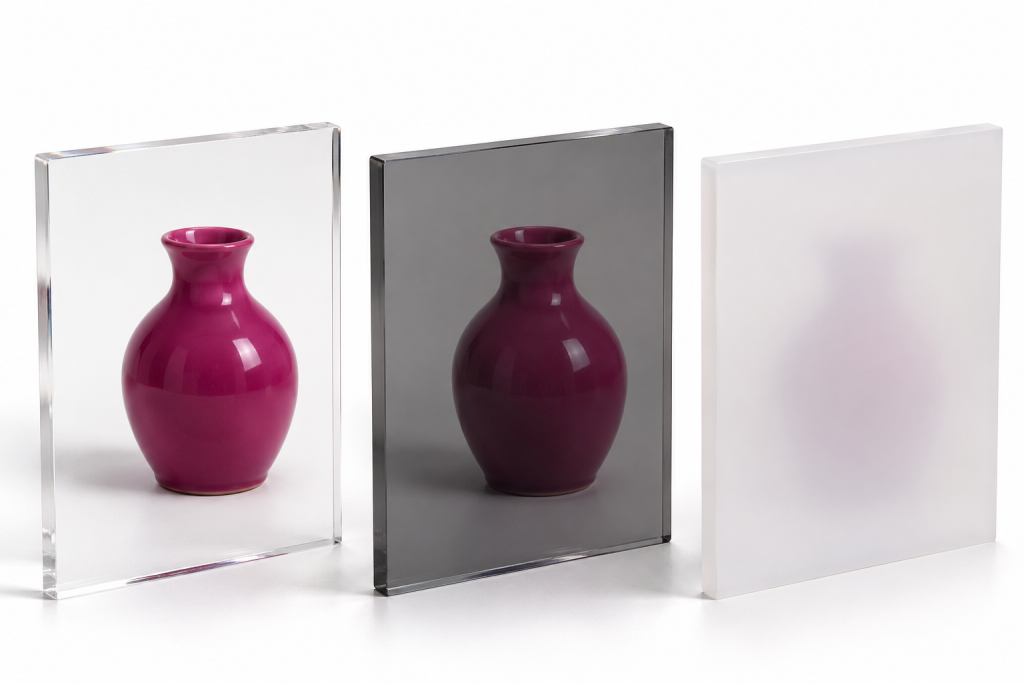
Clear Acrylic: Let the Contents Do the Talking
Clear acrylic sheet makes sense when the objects behind it deserve attention.
Think of a cabinet filled with ceramics, a retail display or a protective cover over a model. The panel needs to preserve the view rather than become the main feature.
However, transparency also reveals the things you might prefer to hide.
Before choosing clear acrylic, look beyond the objects on display. Will you also see cables, shelf brackets, storage tubs or an unfinished backing?
For signage, assess the lettering against the actual background. A clear sign placed in front of a busy display needs a different design from one mounted on a plain wall.
If you are looking for perspex cut to size, include the intended use when enquiring. Confirm the brand separately if your project specifically requires PERSPEX®.
Tinted Acrylic: Change the Look Without Necessarily Hiding the View
Transparent tinted acrylic is worth exploring when you want colour while retaining visibility.
A grey-tinted cabinet insert, for example, creates a different appearance from a colourless panel. However, a darker appearance is not a guarantee of privacy.
Before ordering, test the proposed sheet with the lighting and objects you expect behind it. Inspect it from both sides and at the normal viewing distance.
For a cabinet, try the room lights on and off. If there is internal lighting, include that in the test.
Also avoid treating every coloured acrylic sheet as transparent. The Plastic Warehouse coloured acrylic range includes choices whose visual properties need checking individually.
Ask whether the specific colour is transparent, translucent or opaque.
Opal Acrylic: Keep the Light, Change What You See
Opal acrylic is useful when the light passing through a panel matters more than the view through it.
It is commonly associated with illuminated signage and light boxes. Plastral describes opal acrylic as appearing white under normal conditions and producing a diffused appearance when backlit.
However, “opal” does not identify one universal level of light transmission.
Confirm the product code and available technical information. For an illuminated project, test the sheet with the proposed lighting arrangement.
A panel that looks right with the lights off may give a different result when illuminated.
If hiding objects is the priority, test that too. Do not assume a translucent sheet will conceal every shape under every lighting condition.
Is Opal the Same as Frosted Acrylic?
No. These descriptions refer to different characteristics.
Opal generally describes a translucent, light-diffusing appearance. Frosted or satin describes a surface finish, although some products combine these effects.
For example, Plastral describes PLEXIGLAS® Satinice as a matte-finish acrylic used for light diffusion and decorative applications.
When comparing products, ask about the colour, transparency and surface finish separately. A photograph labelled “white acrylic” may not answer all three questions.
Try the Panel in Its Actual Setting
Where samples are available, assess them where the finished panel will sit.
For a display cabinet, check visibility with the contents in place.
For a sign, assess the artwork against its background.
For a light box, test the intended light sources and enclosure arrangement.
For a decorative divider, inspect the view from both sides.
A sample helps assess appearance. It does not establish the thickness, supports or fixings needed for the full-size panel.
Keep the Finish Looking Its Best
Once you have selected the appearance, choose a suitable care routine.
For compatible acrylic surfaces, Kunst-Stoff Anti Static Acrylic Cleaner – 500ml helps remove dust and fingerprints while reducing surface static. Follow the product directions and confirm suitability for specialty finishes or coatings.
Use a clean, soft cloth and follow the sheet’s cleaning instructions.
Frequently Asked Questions
Which Acrylic Is Best for Seeing Through Clearly?
Clear acrylic is the starting point when an unobstructed view matters. Confirm the exact grade and suitability for the application.
Does Tinted Acrylic Provide Privacy?
Not automatically. Check the selected tint under the lighting and viewing conditions of the project.
Can You See Through Opal Acrylic?
Opal acrylic transmits diffused light rather than providing a clear view. How much it obscures depends on the specific product and installation.
Are Opal and Solid White Acrylic Interchangeable?
No. A translucent opal sheet and an opaque white sheet can behave differently when lit. Confirm the required optical properties.
Can Clear, Tinted and Opal Acrylic Be Cut to Size?
Cut-to-size options are available for suitable products. Check the selected product page..
Choose the Acrylic Around the Result
The right choice starts with what you want the finished panel to do.
Show the contents, add a tint or diffuse the light—then confirm the sheet that delivers that effect.
Explore the Plastic Warehouse acrylic sheet range. For more information about acrylic product families, browse Plastral’s architectural acrylic range.
For an instant quote where available, select “Cut to Size” from the size dropdown on the relevant product page and enter your dimensions.
Need help choosing? Email [email protected] with your dimensions, intended use and preferred appearance. Allow up to five business days for cut-to-size preparation, plus delivery time
